
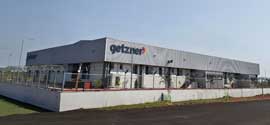
Austrian firm Getzner Werkstoffe continues to expand its international presence and recently opened a new production site in Baramati, India. With this facility, the company strengthens its closeness to customers in the rail and transit sector, shortens supply routes and creates additional capacity for the Indian market.
With its new 4,189 sq m production facility in Baramati, western India, Getzner says it is taking the next step in expanding its activities in India. The Austrian company has been present in the country for many years with vibration isolation solutions. As early as 2009, it established a subsidiary in the industrial hub of Pune. The new plant now enables Getzner to manufacture rail products locally for the Indian market.
“With the new plant in Baramati, we are consistently expanding our international presence. At the same time, we are moving even closer to our customers, can shorten supply routes and support projects on site even more directly in the future,” emphasised Jürgen Rainalter, CEO of Getzner Werkstoffe.
Getzner systems are already contributing nationwide to optimised rail operations, for example in the urban rail transport system of the Agra Metro in northern India. This metro line connects important locations in the city, including the UNESCO World Heritage Site Taj Mahal. Along a route of around 10 km and in the vicinity of major landmarks, Getzner mass-spring systems effectively reduce vibrations and structure-borne noise. By producing components locally for the Indian market, Getzner can now respond more quickly to requirements and further strengthen its position in this strategically important growth region.
With the new plant, Getzner is not only strengthening its presence in India, but is also further expanding its production capacities in Asia. Alongside Kunshan in China, Baramati is already Getzner’s second production site in Asia and another milestone in the expansion of its international business. At the same time, the company continues to invest at its headquarters in Vorarlberg, Austria: a second plant is being built in Nüziders, creating additional capacity in the region.
“Customer proximity is a key success factor for us. With our own subsidiaries on five continents, we create the conditions to be close to the markets and to our customers. At the same time, we are clearly committed to our headquarters in Vorarlberg and are also expanding here with the new site in Nüziders,” says Rainalter.