
Liquid silicone rubber, or LSR, is an advanced elastomer that has gained traction in high-value sectors such as healthcare, automotive, and electronics, with further scope of applications expected, says Angelica Buan.
Easier processing and automated manufacturing have spawned the adoption of liquid silicone rubber (LSR) in key economic sectors. As manufacturers respond to changing requirements and end-user needs, LSR stands out as an ideal high-performance material due to its combination of thermal stability, chemical resistance, and biocompatibility for applications in electronics, healthcare, and automotive industries, especially in the electric vehicle (EV) space.
Innovations in the LSR segment ensure compliance with global material safety standards and specifications such as food safety, and recyclability for certain LSR grades, and they also enable precision moulding and complex part designs; these developments boost market confidence.
Consultancy firm Business Research Insights, in its LSR market forecast, projects the global LSR market to reach a value of nearly US$1 billion in 2026 and almost US$1.54 billion by 2035, expanding at a CAGR of 5.4% from 2026 to 2035, driven by the automotive, healthcare, electronics, and industrial markets. Materials shaping medical applications The medical device sector is a natural fit for LSR, as it has traditionally been used there due to its biocompatibility, chemical inertness, flexibility, and resistance to heat and sterilisation. Consequently, wearables, diagnostic equipment, and other medical and healthcare technologies are enabled by ongoing material developments that improve processing and performance.
Materials shaping medical applications
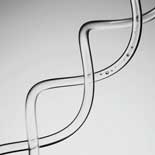
The medical device sector is a natural fit for LSR, as it has traditionally been used there due to its biocompatibility, chemical inertness, flexibility, and resistance to heat and sterilisation. Consequently, wearables, diagnostic equipment, and other medical and healthcare technologies are enabled by ongoing material developments that improve processing and performance.
One example is US materials company DuPont’s Liveo C6-8XX LSR series, developed to meet the stringent performance requirements of medical devices.
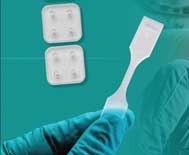
The medical-grade, two-part silicone elastomer series is designed for healthcare applications requiring precision moulding. It features improved rheology and lower viscosity, for faster, more consistent moulding cycles in a fully automated production.
The series offers high heat stability, compatibility with multiple sterilisation methods, and proven biocompatibility, making it suitable for non-implant and short-term implant medical components.
Available in five hardness grades ranging from 30 to 70 Shore A, the LSRs also provide enhanced flow characteristics and a pot life exceeding three days, allowing design flexibility and improved processability.
Advances in medical LSRs are also expanding into electrically functional materials for wearable and connected healthcare technologies.
Norway-based materials provider Elkem ASA has introduced Silbione LSR Select EC 70, a medical-grade LSR developed for wearable healthcare devices, diagnostic equipment, flexible electronics, and advanced sensors. The material combines high electrical conductivity, flexibility, durability, and certified biocompatibility to meet the performance requirements of precision healthcare applications.
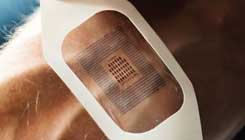
With resistivity below 10 ohm-centimeters, it enables reliable electrical performance while supporting intricate component designs through liquid injection moulding.
The material has passed ISO 10993-5 cytotoxicity and ISO 10993-10 skin sensitisation testing, making it suitable for applications including prosthetics, diagnostic devices, and flexible circuits.
Silbione LSR is designed for use with Elkem’s LSR Select technology, which allows manufacturers to adjust cure kinetics directly within the mould, improving process control, reducing cycle times, and minimising material waste while operating on existing injection molding equipment.
Food-grade LSR takes a shot at lifestyle segments
Food-grade LSR with a sustainability twist offers a safer alternative to rubber in food-contact products. It enables durable and hygienic food-contact applications such as kitchenware, baking tools, and beverage components while meeting strict FDA and BfR regulatory standards.
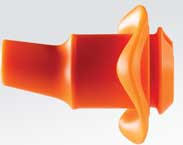
In line with these requirements, German chemicals company Wacker Chemie has raised the ante with its series of temperfree LSR grades for food and sensitive applications, including a biomethanol-based variant. Moulded parts made from Elastosil eco LR 5003 are resource-efficient and comply with food-contact guidelines even without thermal post-treatment, enabling high-volume production of items such as drinking straws, baking tins, dough scrapers, and other lifestyle products.
The grade is also used in air up drinking bottles, where it supports the production of mouthpieces for a flavour pod system that creates sensory perception by transforming plain water into flavoured drinking experiences without sugar or additives, based on retronasal perception.
Elastosil eco LR 5003 is a non-post-cure LSR suitable for large-scale food and sensitive applications. It meets BfR limits for volatile content and FDA food-contact standards without post-curing, while also allowing optional post-curing for higher mechanical strength. Elastosil eco silicone rubber grades are produced from plant-based methanol derived from non-fossil sources and are certified under the REDcert2.