
Once liabilities and eye sore on landfills, end-of-life tyres have now become assets for rubber supply and circularity via chemical recycling and material recovery, says Angelica Buan in this report.
Headlights on for tyre solutions
The tyre sector stands on the precipice of prolonged market shake-up as geopolitical turmoil linked to the Russia-Ukraine war and Iran continues to dent supply chains, raise energy costs and limit access to raw materials.
Meanwhile, trade policies, including tariffs introduced under the current administration of US President Donald Trump, particularly those targeting China, a major global producer and consumer of rubber/rubber products, as well as other Asian countries, have prompted manufacturers to relocate production to lower-cost locations in Asia to manage rising import costs.
At the same time, the industry is vexed by a growing volume of discarded tyres. With billions produced each year and a large share thrown away, recycling and disposal are becoming more difficult and costly, alongside the loss of raw materials each time an end-of-life tyre (ELT) is landfilled.
Releasing the brakes on supply and pricing vulnerabilities, environmental impact from tyre waste and material sustainability gaps, the industry is adopting new approaches of recovering value from ELTs and reducing reliance on feedstocks exposed to price swings and supply gridlock, while widening sourcing options in a market at the crossroads of uncertainty.
Tie-ups lead to R&D and localisation
There is strength in numbers when providing solutions as complex as securing the supply chain for sustainable materials, more so in ensuring a more localised or, at most, easily accessible source. Collaboration among major players in the chemical and automotive industries, tapping scientific expertise, is driving home this point.
Japan’s Bridgestone Corporation has started joint research with Universitas Indonesia, Yokohama City University and Maebashi Institute of Technology on the genetic analysis of para rubber trees to address a major roadblock in rubber sourcing.
Natural rubber supply is strained as demand grows, while production is concentrated in limited equatorial regions and exposed to climate and disease risks, according to Bridgestone. The project uses trees and genetic data from Bridgestone’s natural rubber farm in Indonesia, combined with research from the partner universities, to develop marker-assisted selection technology that enables early identification of high-yield, stable-performing trees.
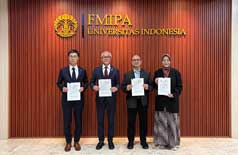
The initiative aims to improve productivity and stabilise natural rubber supply through faster and more precise breeding methods.
Under the collaboration, Bridgestone provides latex samples and genetic information from its plantation, while Universitas Indonesia handles DNA and RNA data collection.
Yokohama City University and Maebashi Institute of Technology conduct genetic and bioinformatics analysis to identify traits linked to higher rubber productivity. The findings will be used to develop selection methods that shorten breeding cycles and allow earlier identification of elite trees, with the long-term aim of improving yields within existing farmland.
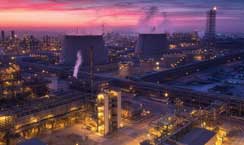
In a related development, chemical firm Saudi Basic Industries Corporation (Sabic) has forged an agreement between Public Investment Fund and Italian tyre maker Pirelli to supply polybutadiene rubber and carbon black for the production of up to 3.5 million tyres/year.
The agreement will lead to the launch of a Saudi tyre brand that will serve both passenger vehicle manufacturers and regional markets, is part of Saudi Arabia’s NUSANED initiative to increase local content and develop domestic tyre manufacturing capability.
Production will take place at a facility in the King Salman Automotive Cluster at King Abdullah Economic City, connecting upstream petrochemical supply directly to local tyre output.
Plant-based tyres a reality
Meanwhile, Finnish tyre manufacturer Nokian Tyres’s Betula concept tyre features a raw material made from birch bark residue. The renewable input, developed by Swedish company Reselo, uses residue from the global pulp, paper and plywood industry. The material is applied in the tread compound of the concept tyre, where renewable and recycled content reaches 93% of all materials used in the tread.
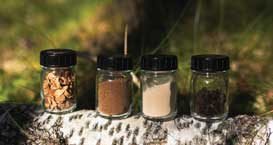
The tyre carries the tread design of the Nokian Tyres Hakkapeliitta R5 non-studded winter tyre and has been tested at Nokian Tyres test centres in Ivalo, Finnish Lapland and Nokia, Finland, with promising results.
The use of plant-based and side-stream materials introduces an additional sourcing route for tyre production by drawing on abundant forestry residues such as birch bark from Nordic regions.
Circularity in tyre recycling
Chemical recycling can keep material supply steady while maintaining circular use of materials. Lummus Technology has invested in InnoVent Renewables to accelerate deployment of its tyre recycling technology.

The company operates a commercial facility in Monterrey, Mexico, with capacity to process up to 1 million passenger tyres/year, and the investment is intended to expand production capability and improve commercial viability.
Lummus has also entered a separate partnership with Advanced Ionics to develop a pilot plant for low-energy electrolyser technology at its R&D facility in Pasadena, Texas, where it will manage operations and balance of plant systems while Advanced Ionics provides the hydrogen production technology. This development introduces novel alternatives to traditional feedstocks.
Meanwhile, Gunvor Group and New Energy (NE-TECH Group) have tied up to advance the use of chemically recycled outputs from ELTs. With the deal, New Energy will supply pyrolysis oil produced at its industrial-scale facility in Dunaharaszti, Hungary, with additional volumes expected from plants under development in Karcag, Hungary, as well as facilities planned in Western Europe and other regions outside the European Union.
The material is derived from delinquent tyres through advanced chemical recycling and is intended for use as a refinery feedstock, replacing conventional fossil-based inputs.
The use of pyrolysis oil from chemically recycled tyres introduces a lower-carbon input into petrochemical processing and enables material reuse from ELTs that would otherwise enter disposal pathways. By integrating recycled feedstocks into refinery operations, the process creates an additional supply source for materials used in tyre and rubber production while contributing to waste reduction within the value chain.
Treading a similar path, specialty chemical company Cabot Corporation has expanded its Asia Pacific circular reinforcing carbon production capacity. It is powered by its Evolve Sustainable Solutions platform to enable global tyre makers to meet their targets of increased renewable material use in tyres, targeting between 40% by 2030 and 100% by 2050.
Cabot’s circular reinforcing carbons act as a drop-in replacement for conventional carbon black, allowing tyre makers to raise sustainable content in their products without changing performance characteristics, it adds. The ISCC Plus-certified materials are produced using tyre pyrolysis oil derived from ELTs.
Cabot says it has validated production of circular reinforcing carbons at its facilities in Cilegon, Indonesia, and Tianjin, China, adding to existing capabilities in Ville Platte (US), Mauá (Brazil) and Valasske Mezirici (Czech Republic).
With 13 ISCC Plus-certified sites across Asia, Europe and the Americas, alongside two certified masterbatch and compounding facilities in Europe, the company now operates production capacity across major regions. This enables a “make-in-region, sell-in-region” model that shortens supply chains and improves material availability in key tyre manufacturing hubs, says Cabot.