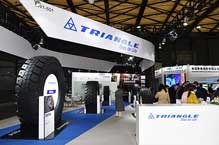
Chinese tyre maker Triangle Tyre is investing around US$460 million to build its first overseas manufacturing base in Cambodia, a move aimed at optimising its international market layout.
According to a statement released, the company plans to build production lines in Svay Rieng province with an annual capacity of 6 million semi-steel radial tyres and 1 million all-steel radial tyres.
The products will mainly be exported to regional markets including North America, Europe, the Middle East, Africa, and Southeast Asia.
Semi-steel radial tyres are primarily used in passenger vehicles, while all-steel radial tyres are mainly applied in heavy commercial vehicles, engineering vehicles, and special operation vehicles.
The new plant represents a renewed push into overseas expansion after Triangle Tyre scrapped plans announced in 2017 to build a factory in North Carolina in the US, a project it terminated in 2022 due to changes in external factors, including the investment environment and the Covid-19 pandemic.
Construction of the Cambodia plant is scheduled to begin in March, with a construction period of about 17 months.
After completion and commissioning, the project’s average annual investment return rate is expected to reach 15.1%, while average annual operating income is projected at CNY2.6 billion, the announcement said.
Building the plant in the Southeast Asian country will allow the company to leverage Cambodia’s advantages as a natural rubber producing areas, as well as lower land and labour costs, helping reduce tariff expenses and enhance profitability, the statement noted.
The facility will also form a differentiated capacity layout with Triangle Tyre’s domestic plants, optimise resource allocation, and strengthen production capacity resilience.
Triangle Tyre is one of China’s major suppliers of commercial and engineering vehicle tyres. The company produced 24.5 million tyres last year and reported overseas revenue of almost CNY6 billion, accounting for nearly 60% of its total revenue in 2024, according to its annual report.