

A team led by Professor David Simmons at the University of South Florida College of Engineering has solved a long-standing question in materials science: how carbon black turns soft rubber into a material strong enough to support a fully loaded jet.
Their findings, published in Proceedings of the National Academy of Sciences, outline the mechanism behind this effect and offer a clearer path for designing more durable materials.
Simmons said researchers had relied on decades of trial and error despite widespread industrial use. According to him, manufacturers could choose from many grades of carbon black—essentially refined soot, but determining which worked best required costly experimentation.
A debate spanning decades
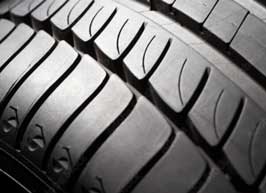
The formula for reinforced rubber has barely changed in a century. Adding microscopic carbon black particles makes rubber tougher, which explains why tyres are both black and durable under heat and repeated stress.
Yet scientists have long disagreed on why this works. Simmons said the issue had fueled debate for decades.
Some researchers believed the particles formed internal chains. Others argued they acted as a binding agent that stiffened nearby rubber. A third group suggested the particles simply occupied space, forcing the material to stretch differently. None of these explanations fully accounted for the observed behavior.
To investigate, Simmons worked with postdoctoral scholar Pierre Kawak and doctoral student Harshad Bhapkar. The team conducted 1,500 molecular dynamics simulations, equivalent to about 15 years of computing time, using high-performance computing systems.
Simmons explained that the total computing time reflected simultaneous use of many processor cores over months, rather than a single long-running simulation.
How rubber resists itself
The team identified the underlying mechanism as a mismatch in Poisson’s ratio, a measure of how materials change shape under stress.
Simmons compared the effect to pulling the plunger of a sealed, water-filled syringe. According to him, water resists compression, so pulling harder increases resistance.
Rubber behaves similarly. When stretched, it thins while maintaining nearly constant volume. However, carbon black particles act as microscopic supports that limit thinning. This forces the material to increase in volume, which rubber naturally resists.
As a result, the rubber effectively resists its own deformation, producing greater stiffness and strength.
Unifying competing theories
The findings do not dismiss earlier ideas. Instead, they bring them together.
The team found that particle networks, adhesive interactions and space-filling effects all contribute to the resistance to volume change. These mechanisms work together rather than independently.
Early simulations failed to match experimental data. The researchers then incorporated insights from prior studies, which led to a model that matched real-world behavior and provided the first complete explanation of rubber reinforcement.
Implications for industry and safety
The research could change how tyres are designed. Engineers have long struggled with the “Magic Triangle” of tyre performance: improving fuel efficiency, traction and durability at the same time.
Manufacturers have depended on trial and error to balance these factors. Simmons said that approach has limits, especially when trying to optimize all three properties simultaneously.
The new findings provide a foundation for designing tyres with better grip, longer lifespan and improved fuel efficiency without relying solely on experimentation.
The impact extends beyond tyres. Reinforced rubber is used in power plants, aerospace systems and everyday products.
Simmons pointed to the Space Shuttle Challenger disaster as an example, saying the failure was linked to a rubber gasket that became brittle in cold conditions. He added that similar materials are widely used in critical systems, where failure can have serious consequences.
The study was supported by the US Department of Energy Office of Science.
***
Source: USF (https://www.usf.edu/news/2026/usf-scientists-solve-100-year-old-mystery-behind-rubber-that-powers-modern-life.aspx)