
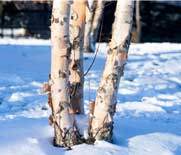
The EU-supported NORDIC BIO-RUBBER project is advancing a fully bio-based rubber alternative derived from birch bark, an abundant residue from the pulp, paper and plywood industries. Through the project, researchers refined a birch bark bio-refinery process and demonstrated that the resulting material – the Reselo Rubber – can meet performance requirements while providing a more sustainable basis for Europe’s rubber supply.
Reselo Rubber offers a viable alternative to the environmental and supply issues linked to both fossil-based and plantation-derived rubber. Technical lead Thomas Baumgarten said the material is entirely bio-based and, once produced at scale, is expected to deliver up to a 90% reduction in carbon dioxide emissions compared with conventional fossil-based rubbers. Beyond lower emissions, the material also avoids the environmental harm often associated with natural rubber plantations, such as tropical rainforest deforestation and biodiversity loss caused by monoculture farming.
Birch bark is widely available across the Northern Hemisphere and is often sourced from FSC-certified forests, supporting responsible forest management. This availability underpins the project’s focus on developing a robust and scalable production model.
The project team concentrated on improving solvent recovery, refining process steps with support from engineering consultants and suppliers, and designing an overall process suitable for efficient industrial scale-up. An assessment of birch bark supply has shown that Europe already generates sufficient volumes to support annual industrial-scale production of Reselo Rubber. This strengthens its potential as a feedstock for a Europe-based rubber value chain.
Baumgarten said that many stakeholders in the forestry sector have begun examining alternative applications for birch bark, and that the project’s progress offers a high-value commercial pathway for this previously underused resource.
Collaboration with companies in the footwear, automotive and tyre sectors has already led to the development of products that meet or exceed current industry benchmarks. Baumgarten added that projects involving multiple industrial partners have shown the material can function as a direct substitute, as it can be processed using existing production infrastructure.
The project has also begun examining potential uses for two additional fractions generated during the Reselo bio-refinery process. One fraction already has an established market, with partnerships supporting further growth, while the remaining fraction will require additional research before it can be applied beyond energy use.
Moving towards commercialisation will require investment in a dedicated production plant. Supportive policy frameworks, including carbon-based taxation or incentives for bio-based materials, could further speed up adoption and contribute to a more secure and sustainable rubber supply for Europe, which remains the project’s long-term objective.