
Japan’s Tokai Carbon Co has tied up with Takuma Co to undertake the development of solid carbon manufacturing technology for the establishment of a circular carbon economy, a joint project among Smart City Planning Co.
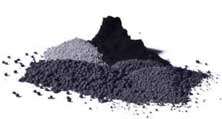
The project aims to develop technology to manufacture carbon-neutral conductive carbon material by separating and capturing carbon dioxide (CO2) emitted during municipal solid waste treatment and converting it into solid carbon. The planned project duration is from 2025 to March 2028, with the goal of achieving social implementation by FY2030.
Currently, various companies and research institutions are developing technologies to separate and capture CO2 from municipal solid waste treatment plants, such as incineration plants. However, the utilisation of captured CO2 is limited due to issues concerning quality and manufacturing costs.
On the other hand, while demand for conductive carbon material such as carbon nanotubes (CNTs) is increasing for applications such as secondary battery material, they face the challenge of emitting large amounts of CO2 because their raw material and production processes rely on fossil resources.
To address these challenges, the project, which commercialises a carbon-neutral conductive carbon material using CO2 derived from municipal solid waste treatment as raw material, will be jointly implemented by the three companies: Smart City Planning, with extensive demonstration achievements in the field of resource circulation; Takuma, which specialises in the design, construction, and operation of municipal solid waste treatment plants; and Tokai Carbon, which primarily manufactures high-quality carbon and graphite products.
Smart City Planning will primarily handle the overall project supervision and business plan formulation. Takuma will develop the solid Carbonisation system. This system separates and captures CO2 emitted during municipal solid waste treatment, reduces the CO2 to carbon monoxide, and subsequently convert it into solid carbon in a reactor. By utilising energy such as electricity and heat generated during the waste treatment process, the system aims to operate without relying on fossil fuels or externally supplied energy.
Tokai Carbon will focus on optimising the reaction and manufacturing processes, including quality improvement and cost reduction, to commercialise solid carbon products.
The project is expected to not only develop the technology but also verify its CO2 reduction effects and economic viability. Based on these findings, the parties aim to commercialise the carbon-neutral conductive carbon material as a substitute for CNTs by FY2030.